
 UEA?
UEA?La vera aspekto de la retejo ne povas por esti korekte rigardata per via retumilo.
Throughout the world, many people have heard of the Truth and Reconciliation Commission, established in South Africa after the end of apartheid with the goal of shining light on a dark history. It’s likely, however, that many are unaware that Canada – a country seen internationally as tolerant and democratic – set up its own Truth and Reconciliation Commission in the year 2008, to research and document another dark history: that of the notorious residential schools, where several generations of indigenous children suffered physical and spiritual mistreatment, the suppression of their languages and cultures, and the destruction of their ties to family, community and land of origin.
The Canadian Commission completed its work in 2015 with the publication of a several volumes of reports and 94 recommendations that bear on many aspects of Canadian society. Among them are various educational issues – education being a field which, according to the chief commissioner, Judge Murray Sinclair, will play a key role in progress towards a more just society, just as it played a key role in the injustices of the past. The newly elected Canadian government has declared that it intended to implement all 94 recommendations. In order to do so, however, it will require the cooperation of many other levels of Canadian society, not least the ten provinces, which according to the Constitution have exclusive jurisdiction in the field of education.
As a professor of education at Simon Fraser University, one of the major universities of Western Canada, I am in a privileged position to bear witness to many of the developments now taking place, partly in parallel with, partly in response to the Commission’s recommendations. In fact, what is afoot is a vast and complex process of social change whose influence on the education system will be far more profound than an external observer might assume. In this lecture I shall sketch a few of the main currents in this process: changes in teacher training, in the curricula and pedagogies of the public schools, in the teaching of indigenous languages, and in commonly accepted notions of Canadian history, culture, and their relationship to land and nature. I shall conclude by suggesting that the journey towards sustainable development, as promoted by the United Nations, entails similar challenges for every country in the world.
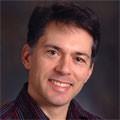
Mark Fettes focused his doctoral studies on the linguistic ecology of education, inspired by his earlier research on the maintenance and revitalization of indigenous languages in Canada. In British Columbia he leads research projects and study programs on indigenous and ecological education. He is the Director of the Centre for Imaginative Education at Simon Fraser University, Vancouver, Canada.
El Gazetaraj Komunikoj
UEA invitas prelegi en la 74-a IKU-sesio en Belfasto
Gazetaraj Komunikoj n-ro 912 (2020-10-20)
IKU-libro 2020: rekorde elŝutita
Gazetaraj Komunikoj n-ro 900 (2020-08-10)
Programo de la Internacia Kongresa Universitato (IKU) en Montrealo
Gazetaraj Komunikoj n-ro 856 (2020-03-19)
UEA invitas IKU-prelegantojn por Montrealo ĝis 15.01.2020
Gazetaraj Komunikoj n-ro 841 (2019-12-25)
UEA invitas prelegi en la 73-a IKU-sesio en Montrealo
Gazetaraj Komunikoj n-ro 823 (2019-09-11)
Aldonaj informoj
- Regularo pri Internacia Kongresa Universitato
- Taskoj kaj limdatoj pri IKU
- IKU kaj Esperanto en la scienco kaj tekniko (artikolo de Prof. Amri Wandel).
- La Akademio Internacia de la Sciencoj (prezento por la Almanako de UEA).
- [en] IKU and Esperanto in Science and Technology (in English)
- [fr] IKU et Espéranto dans les sciences et techniques (en Français)