
 UEA?
UEA?La vera aspekto de la retejo ne povas por esti korekte rigardata per via retumilo.
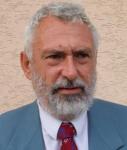
Everyone knows that in modern, 21st-century societies governments organise and supervise the economic, social and cultural life of the world’s various countries, so it can be said that governments supervise people. However, not everyone knows (though the question is a very important and significant one) who supervises the governments.
According to Montesquieu’s principles, in democratic social systems it is necessary for the parliamentary, governmental and judiciary powers to be separated and a strong state institution to have the legal power to effectively supervise governments and audit how they spend money from the national budget. Nowadays there are three systems in use in the world.
- In the Mediterranean model special courts have this function, for example the Tribunal de Contas in Portugal, or the Cour des Comptes in France.
- In the Scandinavian model government offices perform the task, for example the Riksrevisionen in Denmark or the Riksrevisionsverket in Sweden, but the State Audit Office of Vietnam, also, is the same type of organisation.
- In the third model parliamentary offices have this function, for example the National Audit Office in Britain or the Állami Számvevőszék in Hungary.
The lecture starts by looking at how and when in history this function appeared and gives an overview of which institutions had the task in various countries. After this overview there is a discussion of the advantages and disadvantages of the various supervisory and audit models in use. This is followed by an analysis of the methods that enable effective supervision of the activities of government offices, and the last part of the lecture focuses on the proposals from INTOSAI (International Organisation of Supreme Audit Institutions) for a more effective fight against corruption and for promoting faster economic development.
El Gazetaraj Komunikoj
UEA invitas prelegi en la 74-a IKU-sesio en Belfasto
Gazetaraj Komunikoj n-ro 912 (2020-10-20)
IKU-libro 2020: rekorde elŝutita
Gazetaraj Komunikoj n-ro 900 (2020-08-10)
Programo de la Internacia Kongresa Universitato (IKU) en Montrealo
Gazetaraj Komunikoj n-ro 856 (2020-03-19)
UEA invitas IKU-prelegantojn por Montrealo ĝis 15.01.2020
Gazetaraj Komunikoj n-ro 841 (2019-12-25)
UEA invitas prelegi en la 73-a IKU-sesio en Montrealo
Gazetaraj Komunikoj n-ro 823 (2019-09-11)
Aldonaj informoj
- Regularo pri Internacia Kongresa Universitato
- Taskoj kaj limdatoj pri IKU
- IKU kaj Esperanto en la scienco kaj tekniko (artikolo de Prof. Amri Wandel).
- La Akademio Internacia de la Sciencoj (prezento por la Almanako de UEA).
- [en] IKU and Esperanto in Science and Technology (in English)
- [fr] IKU et Espéranto dans les sciences et techniques (en Français)